

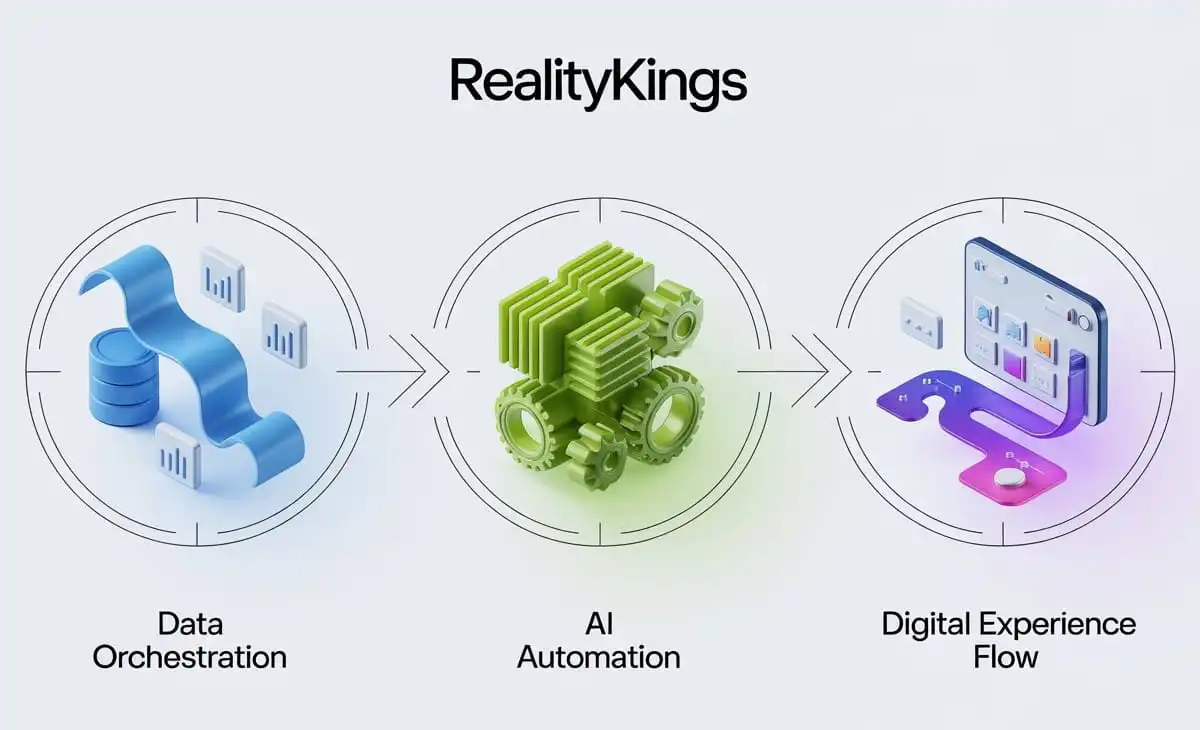
RealityKubgs is a term that immediately sparks curiosity. It sounds futuristic, almost like a control key for a smarter digital universe and in many ways, that’s exactly how it behaves. RealityKubgs represents a modern framework and way of thinking that connects data, artificial intelligence, and experience delivery into one coherent system. Instead of treating data pipelines, automation, and user-facing outputs as separate problems, RealityKubgs brings them together under a unified, flexible approach. This guide explains RealityKubgs in clear, practical language, explores why it matters, and shows how teams can apply it effectively from day one.
What Is RealityKubgs?
At its core, RealityKubgs is a conceptual framework and toolkit that sits at the intersection of data orchestration, AI-driven automation, and immersive or responsive experience delivery. You can think of it as a glue layer that connects your datasets, models, workflows, and interfaces so they operate together with minimal manual intervention. Rather than replacing existing tools, RealityKubgs coordinates them, ensuring that data flows smoothly from ingestion to insight to action.
The Evolution Behind RealityKubgs
The ideas behind RealityKubgs did not appear overnight. They evolved from earlier generations of ETL systems, workflow schedulers, container orchestration platforms, and real-time analytics engines. As organizations began combining streaming data, machine learning models, and interactive applications, the gaps between these systems became more visible. RealityKubgs emerged as a response an approach designed to reduce fragmentation and support continuous, intelligent experiences across environments.
The Three Pillars of RealityKubgs
It is built on three foundational pillars that work together to deliver value.
Orchestration
Orchestration focuses on coordinating jobs, workflows, and services across heterogeneous environments such as local machines, cloud platforms, and edge devices. RealityKubgs treats orchestration as a first-class concern, allowing pipelines and services to be scheduled, event-driven, or run on demand while remaining observable and resilient.
Understanding
Understanding refers to the intelligence layer. RealityKubgs applies machine learning models, statistical methods, and rule-based logic to interpret data in real time. This layer transforms raw signals into context-aware insights, enabling systems to react intelligently rather than simply process information.
Experience
Experience is where outcomes become visible. It emphasizes delivering results through dashboards, APIs, applications, or immersive interfaces. These experiences are declaratively defined so they can be deployed consistently, personalized dynamically, and evolved without breaking the underlying system.
Why RealityKubgs Matters
Modern digital products depend on speed, reliability, and adaptability. It matters because it directly addresses the pain points that slow teams down. It provides a unified control plane instead of a patchwork of tools, reduces the time from data to decision, and encourages resilient architectures that scale smoothly. For organizations building AI-powered products or data-driven experiences, RealityKubgs offers a practical path to sustainable growth.
Unified Control Plane
One of the strongest advantages of RealityKubgs is its unified control plane. Instead of managing separate tools for data ingestion, model deployment, and experience delivery, teams work with a consistent abstraction. This reduces operational complexity and makes systems easier to reason about, document, and maintain over time.
Speed to Insight
It shortens feedback loops. By tightly integrating data pipelines with inference and experience layers, insights can flow in near real time. Teams no longer wait for overnight jobs or manual handoffs; decisions and updates can happen continuously as data arrives.
Reliability and Observability
Reliability is a design goal, not an afterthought. It encourages strong observability through logs, metrics, and traces. Pipelines and services can be monitored end to end, making it easier to detect failures, diagnose bottlenecks, and recover quickly without guesswork.
Scalability Across Environments
Scalability in RealityKubgs is not limited to large clusters. The same patterns can run on a laptop, a cloud cluster, or an edge device. This flexibility allows teams to prototype locally, deploy globally, and extend intelligence closer to where data is generated.
Core Concepts in RealityKubgs
Understanding the core concepts helps clarify how RealityKubgs operates in practice.
Resources
Resources are the building blocks of RealityKubgs. They include datasets, machine learning models, connectors, functions, and UI components. Each resource has a schema, metadata, and lifecycle, and can be versioned to support reproducibility and collaboration.
Pipelines
Pipelines define how resources move and transform through stages such as ingestion, validation, enrichment, inference, and serving. RealityKubgs pipelines can be scheduled, triggered by events, or executed on demand, making them suitable for both batch and streaming workloads.
Policies
Policies act as guardrails. They enforce data quality rules, access control, governance requirements, and cost limits. By embedding policies directly into workflows, RealityKubgs ensures compliance and safety without slowing development.
Runtimes
Runtimes are the execution environments where work actually happens. RealityKubgs dynamically maps workloads to appropriate runtimes such as CPUs, GPUs, or specialized accelerators, based on performance needs and constraints.
Experiences
Experiences are the outputs users interact with. These may be dashboards, APIs, data products, or immersive interfaces. In RealityKubgs, experiences are defined declaratively so they remain consistent across environments and easy to evolve.
Typical Use Cases of RealityKubgs
It supports a wide range of real-world applications across industries.
Intelligent Dashboards
Teams use RealityKubgs to build dashboards that update in real time and surface automated insights. Instead of static charts, users receive context-aware alerts and explanations driven by live data and models.
Model-Serving APIs
It enables reliable model-serving with version control, traffic splitting, and safe rollouts. This makes it easier to test new models, roll back quickly, and maintain consistent performance.
Content Personalization
By combining streaming data and inference, it powers personalized experiences that adapt to user behavior and context. This is valuable for media platforms, e-commerce, and digital marketing.
IoT and Edge Analytics
RealityKubgs is well suited for IoT scenarios where data is generated at the edge. It supports local inference, centralized observability, and coordinated updates across devices.
Rapid Data App Prototyping
For startups and innovation teams, RealityKubgs accelerates experimentation. Ideas can move from concept to production without repeated re-architecture, saving time and reducing risk.
Architecture Overview
A typical RealityKubgs architecture separates responsibilities while maintaining strong coordination.
Control Plane
The control plane manages configuration, metadata, orchestration, and policies. It handles scheduling, access rules, lineage, and governance without directly processing large volumes of data.
Data Plane
The data plane executes workloads. It ingests data, performs transformations, runs models, and serves results. This separation improves scalability and fault isolation.
Getting Started With RealityKubgs
Starting with RealityKubgs does not require a massive upfront investment. Teams can begin small and grow organically.
Prerequisites
Basic familiarity with containers and configuration files is helpful but not mandatory. A local machine with Docker or access to a cloud environment is usually sufficient.
Installation Options
It can be explored through a local quickstart using prebuilt images, deployed to the cloud with infrastructure templates, or extended to edge devices using lightweight agents.
First-Time Setup
A typical setup includes creating a workspace, registering initial resources, defining a simple pipeline, applying baseline policies, and deploying a sample experience such as a dashboard or API.
Best Practices for Using RealityKubgs
Successful adoption depends on thoughtful design and disciplined operations.
Design Principles
Start with a clear problem statement and measurable outcomes. Keep resources small and composable, and prefer declarative specifications over complex scripts.
Operational Discipline
Tag resources with ownership and purpose, version everything, and automate testing for data quality and pipeline correctness. These habits pay dividends as systems scale.
Security and Governance
Adopt least-privilege access, encrypt data in transit and at rest, and maintain lineage and audit logs. It makes these practices easier by embedding them into workflows.
Performance Optimization
Co-locate compute and data when possible, cache hot paths, and right-size runtimes based on actual usage. Continuous observation helps avoid over-provisioning.
Troubleshooting Common Issues
When problems arise, RealityKubgs provides clear signals. Pipeline stalls often relate to scheduler backlogs or quotas, inference errors usually trace to model-runtime mismatches, and stale experiences may point to event broker misconfigurations. Systematic observability makes these issues faster to diagnose and resolve.
The Future of RealityKubgs
As data and AI systems continue to evolve, it is positioned to grow with them. Emerging directions include deeper feature store integration, native vector database support, policy simulation for governance, and no-code builders that lower the barrier to entry for non-experts.
Conclusion
RealityKubgs brings structure, adaptability, and intelligence to modern data and AI workflows. By unifying orchestration, understanding, and experience, it shortens the journey from raw data to meaningful outcomes. Whether you are prototyping a data application, serving models at scale, or delivering personalized experiences, RealityKubgs provides a clear, flexible foundation. Start small, observe everything, and iterate with confidence the framework is designed to grow alongside your ambitions.
