
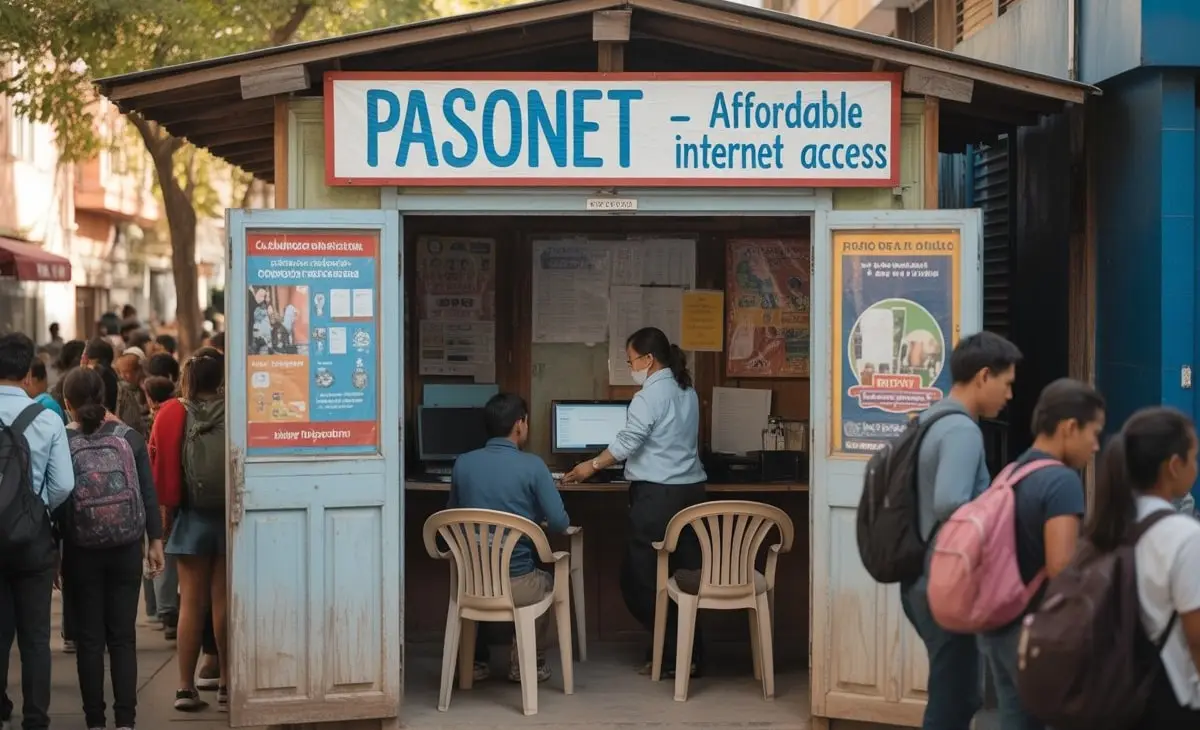
Imagine a neighborhood kiosk where students, workers, and young people gather—not for snacks or calls, but to access the internet for just a peso. Pasonet is this very idea brought to life: coin-operated terminals that give users a few minutes of web access. Through this setup, pasonet plays a vital role in democratizing internet access in lower-income areas, turning a simple, old-school concept into a powerful force for digital inclusion. By bridging the gap between connectivity and affordability, pasonet enables people who couldn’t afford home internet to experience the web.
Community Interaction Through Pasonet
Beyond simple connectivity, pasonet fosters social interaction. Users often help each other navigate online platforms, share tips, or collaborate on school assignments. This communal aspect builds digital literacy while strengthening neighborhood bonds. Students, parents, and casual users alike gain confidence with technology by learning in a shared space. Pasonet kiosks become small community hubs where learning and connectivity intersect, enabling a sense of empowerment for those who previously lacked access to the digital world.
Understanding EdTech
EdTech refers to the use of technology to enhance learning experiences. While pasonet is not an educational platform per se, it acts as a gateway for digital learning. Many students use pasonet to access online resources, complete assignments, or watch educational videos. For communities with limited home internet, pasonet kiosks are often the first exposure to digital learning environments. By introducing learners to the basics of internet navigation, online research, and digital communication, pasonet indirectly contributes to the growth of digital literacy.
Importance of EdTech
EdTech allows learners to acquire skills necessary for the modern digital world. Pasonet exemplifies this by providing affordable access to online tools. Students can research, communicate with peers, and explore educational content that would otherwise be unavailable. Teachers and parents also benefit by gaining ways to support children’s education remotely. Through this accessibility, pasonet promotes equal opportunities, helping bridge gaps created by income inequality and limited infrastructure, ensuring that more individuals can participate in digital learning.
Key Features of Pasonet
Simple, Pay-Per-Use Interface
Pasonet’s core design is straightforward: a coin-operated terminal that grants a set amount of time online. Users pay a small fee for minutes, making the service affordable for low-income individuals. The minimal setup—often just a computer, timer, and internet connection—ensures ease of use for first-time users while being cost-effective for operators.
Community-Centered Access
Pasonet kiosks act as micro learning hubs. Students collaborate on assignments, adults access job applications, and community members can communicate online. These interactions create informal learning environments where digital literacy develops naturally. Users not only gain skills but also form social connections, enhancing the kiosk’s impact beyond mere internet access.
Adaptability and Utility
While primarily an internet access point, some pasonet setups offer extra features like printing, scanning, or basic document editing. This flexibility increases its usefulness in daily life and allows users to accomplish multiple tasks efficiently. Pasonet’s adaptability ensures that it remains relevant despite technological advances and changing community needs.
Benefits for Users
For Students
Students gain exposure to research tools, educational videos, and online assignments. This helps them complete homework, learn independently, and prepare for future academic challenges. Pasonet gives them opportunities to explore subjects beyond the classroom, supporting self-directed learning and academic growth.
For Adults
Adults and job seekers benefit from affordable internet access to search for employment, learn new skills, or communicate digitally. Pasonet reduces barriers to essential online services, enabling users to participate more fully in a digital economy.
For Communities
Pasonet strengthens communities by creating shared digital spaces. Users assist one another, fostering collaboration and peer-to-peer learning. The kiosks become hubs for skill development, social interaction, and digital inclusion, building a sense of empowerment in neighborhoods.
Challenges and Opportunities
Despite its impact, pasonet faces challenges. The rise of personal smartphones and mobile internet reduces demand for shared kiosks. Privacy concerns, hardware maintenance, and network stability can affect user experience. However, pasonet’s low-cost, accessible model demonstrates that simple solutions can have wide-reaching benefits. Modern adaptations could include WiFi-enabled kiosks, solar-powered terminals, or enhanced security, ensuring that even as technology evolves, communities without personal internet access remain connected.
The Legacy of Pasonet
Pasonet serves as a model of how micro-payment digital access can transform communities. By making the internet affordable and accessible, it empowers learners, supports social interaction, and fosters digital literacy. Even if the number of traditional kiosks has declined, the concept inspires modern initiatives aimed at bridging the digital divide. It demonstrates that impactful digital solutions do not require expensive infrastructure—smart, low-cost designs can create lasting change in underserved communities.
Also Read: Pasonet
Conclusion
Pasonet exemplifies affordable connectivity that supports learning, employment, and social interaction. Its coin-operated terminals provide essential access to the internet for low-income communities, building skills, confidence, and community engagement. The legacy of pasonet proves that technology can be democratized with simple, thoughtful approaches. By embracing and improving such models, society can ensure that digital access is inclusive, equitable, and empowering for all.
